
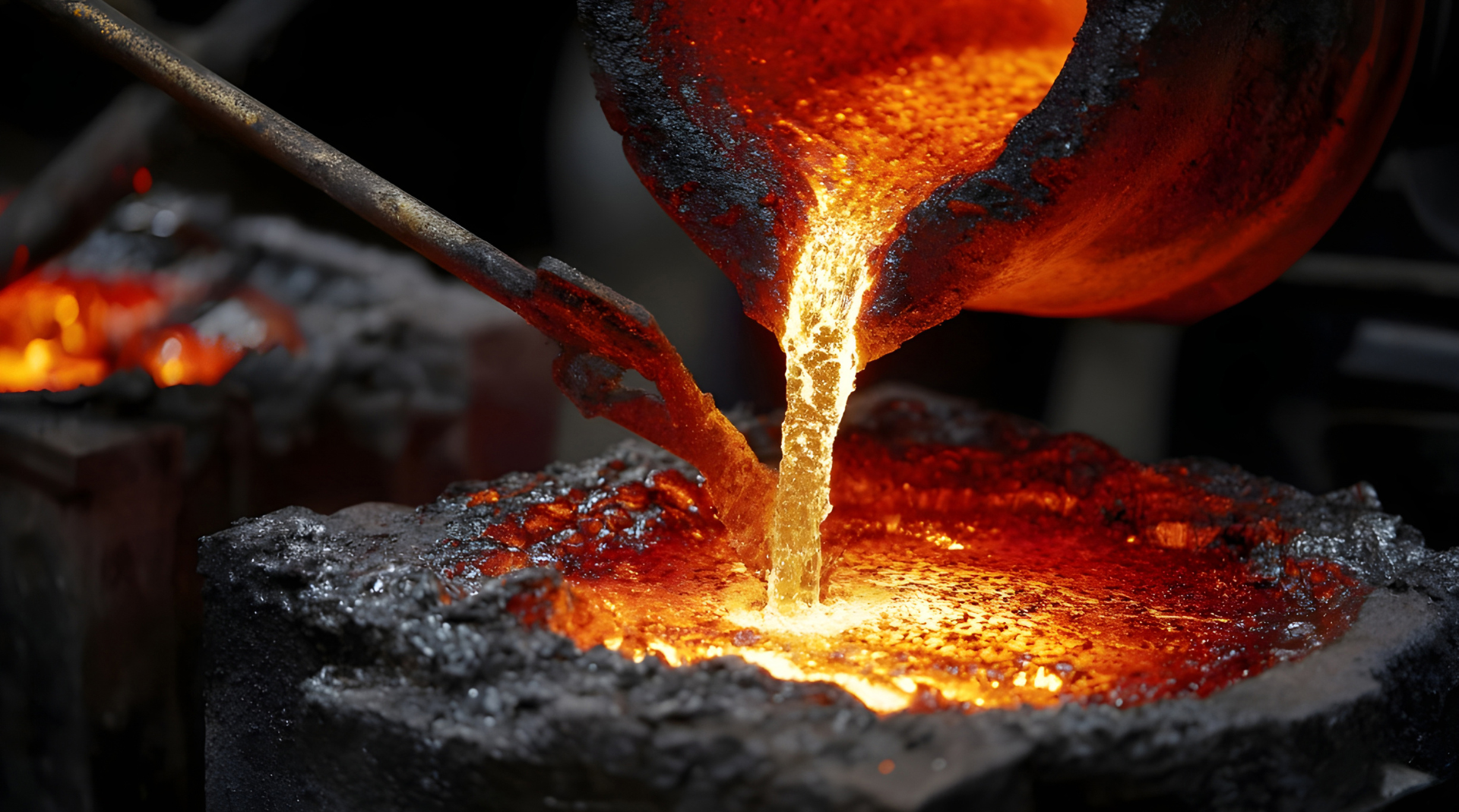
The abyss never sounds like a place you’d go willingly, but the hero’s journey doesn’t offer a shortcut around the hard parts. The transformation happens in the fire, inside the forge where raw material meets heat and becomes something new.
There’s no shortage of heat at the moment. Oil prices remain stubbornly high, the Fed is moving through a leadership transition with a deeply divided committee, and the broader global picture carries more uncertainty than most investors have seen in years.
What makes this stretch so interesting is what’s happening inside the fire. The U.S. industrial economy, far from buckling under the pressure, could be putting together one of its strongest runs in recent memory.
Here’s what’s shaping up and where the opportunity lives.
The Goods Economy Wakes Up
Despite surging oil prices and geopolitical turbulence in the Middle East, the data coming out of the U.S. industrial economy is hard to argue with. Freight volumes have rebounded sharply. Manufacturing activity is on track for its best year in years, fueled by a convergence of forces that go well beyond a single catalyst.
The buildout of AI infrastructure, data centers in particular, is generating massive demand for construction, materials, and heavy equipment. Bonus depreciation policies are incentivizing businesses to invest in hard assets now rather than later. Domestic energy advantages, especially abundant natural gas, are giving U.S. manufacturers a cost edge that’s pulling production back onshore.
And freight, the circulatory system of the real economy, is confirming all of it. Trucking volumes, rail carloads, and manufacturing PMI readings are all running at levels not seen since 2022 or earlier. The long freight recession that defined much of 2025 appears to be over.
Every truck on the road, every rail car loaded, every factory running a second shift generates receivables. And receivables are the raw material factoring is built on. When the goods economy runs this hot, the operators with capacity and speed have the advantage.
Rates, Warsh, and the Road Ahead
While the industrial side heats up, the rate environment remains one of the most closely watched variables in the economy.
Kevin Warsh’s path to the Fed chair is moving forward, and markets are watching closely. The consensus view is that a Warsh-led Fed would be somewhat more open to easing, particularly through his argument that AI-driven productivity gains could allow stronger growth without reigniting inflation. Think the 1990s under Greenspan, updated for the age of machine learning.
That said, expectations remain tempered. The FOMC is deeply divided, inflation is still running above target, and elevated oil prices give policymakers every reason to stay cautious. Most forecasts see little to no easing in 2026, perhaps one or two quarter-point cuts at best, and some models even assign odds to a hike.
Where it gets more interesting is on the long end. Some investors are making a high-conviction bet that 10- and 30-year Treasury yields will fall meaningfully this year, driven by Warsh’s dovish tilt, AI-fueled disinflation, and potential softening in parts of the labor market. Bessent has made the 10-year yield the administration’s key benchmark, arguing that policy (energy dominance, deregulation, deficit control) will bring long-term rates down naturally.
If they’re right, the ripple effects would be significant. Lower long-term yields would pull mortgage rates down, unlock housing demand, reduce corporate borrowing costs, and pour fuel on an industrial recovery that’s already revving. Construction-related freight and materials demand would accelerate. Business investment, already supported by bonus depreciation, would get another tailwind.
Connect the dots and the picture is unmistakably a factoring story. Cheaper capital fuels more business activity. More activity generates more receivables, and more receivables reward the firms that have already built the infrastructure to move on them quickly.
See You in Nashville
We’re excited to announce that Dare will be attending the IFA’s 32nd Annual Factoring Conference, May 6-8 at the Omni Hotel in Nashville.
I’ll be speaking on behalf of the American Factoring Association as its president, and I’d encourage anyone in the industry to attend and consider supporting the AFA with a donation.
If you’re interested in learning more about BRS partnerships or just want to connect, I’ll be available for private meetings throughout the conference. Reach out and let’s find time to talk.
Treasure Inside the Fire
The heat isn’t going away. Oil, rates, geopolitics, and the pace of technological change are all applying pressure from different directions. But pressure, applied well, is how the strongest things are made.
Joseph Campbell knew the treasure was never sitting out in the open. It lives inside the abyss, inside the forge. And the only way to recover it is to step in, trust your preparation, and let the fire reshape what you’re building into something that holds.
Ready to turn pressure into growth?
As a Dare Back Room Service partner, you’ll get access to:
- Greater Income (like a lot more)
- Owning assets instead of commissions
- Zero investment down
- No personal liability
- Fifty-fifty split on risks and profits
- Portfolio management software from NN6, LLC
Ready to learn more? Give us a call.
If you enjoyed this newsletter, pass it along to your friends.
Until next time,