

Every hero’s journey has its series of choice points.
Not the call to adventure, that part is easy. When conditions get uncomfortable and the exit ramps appear, many choose to get off the ride. But a true hero commits to seeing it through.
This idea shows up everywhere we operate. In markets drifting higher on policy support. In real-economy businesses that move slower than headlines suggest. And especially in factoring.
Once you commit capital, relationships, and trust, you don’t get to selectively participate. You fund through cycles. You manage risk in motion. You stay standing when others step aside.
This week, we’re taking a closer look at the terrain we’re operating in and why partnership and preparation matter more than ever.
Memes

Markets That Won’t Break (Yet)
One of the clearest signals of this cycle came from an unlikely source: a short seller who doesn’t want to short.
Carson Block of Muddy Waters recently explained why betting against markets has become one of the hardest trades in existence. Passive index flows, buybacks, and constant policy intervention have loosened the relationship between prices and fundamentals.
As long as capital keeps pouring into indexes and momentum remains intact, markets can stay elevated far longer than logic allows. Risk gets buried out of sight, even though it’s still there.
For Block, the biggest concern is insurance. It’s quietly financialized and underwritten through opaque structures. It’s vulnerable to stress when conditions change. These risks aren’t immediate, but they do compound.
When disruptions arrive, history suggests the response will look familiar: liquidity, intervention, and wealth shifting upward.
For operators and capital providers alike, this is something to keep on the radar. Markets can remain resilient even as pressure builds underneath. Success in this environment favors structures built to absorb stress.
Keeping the Engine Hot
If markets won’t crack easily, it’s because policy doesn’t want them to.
In recent interviews, Scott Bessent laid out the Trump economic agenda. Growth must outrun debt, tariffs become strategic tools, and the Federal Reserve needs reform. Bessent says the economy must shift away from heavy government dependence toward private capital and production.
On paper, things look encouraging. Production is picking up, consumers are still spending, wages are technically running ahead of prices, and lower energy costs are easing some pressure.
But for a lot of American households, the math still doesn’t work. Costs that matter most (housing, insurance, childcare) haven’t really come down. Sometimes “strong spending” just means people are paying more for less.
Whatever your personal reality at the moment, the message from policymakers is pretty clear: keeping the economy moving is the priority. Volatility hasn’t gone away, it’s just being pushed further out. This changes how businesses and capital providers have to think about risk and timing.
Rules of Engagement
The rules of the game are changing and the system is adjusting around it.
Michael Every frames the current moment as a shift from traditional economic policy to “economic statecraft” where finance, trade, industry, energy, and security move together. The rules-based order is unraveling with a purpose: it’s being deliberately reshaped.
The U.S. is tightening supply chains, redirecting capital, reshoring production, and using financial infrastructure itself as leverage. Even money itself is evolving. Dollar-backed stablecoins may extend dollar dominance globally while bypassing traditional banking rails and reinforcing American economic gravity.
Markets, money, and geopolitics are no longer separate conversations. They’re different expressions of the same force. When conditions tighten, the advantage belongs to those who planned for it.
Where Factoring Fits
Factoring sits beneath the surface of the real economy. It operates in trucking, construction, and trade (sectors that don’t slow down just because markets feel uncertain). It has to function through good years and bad. Control over cash flow becomes control over outcomes.
Once you commit to a client or a portfolio, you don’t get to opt out when conditions tighten. Construction funding doesn’t stop mid-project. Freight still moves. Payroll still runs. The work continues.
Small factors figured out that partnering with us makes sense, relieving them from the usual headaches. Over the last 18 months, we’ve acquired four different portfolios.
Funding complexity, compliance pressure, insurance exposure, and operational load compound quickly. Working with us allows firms to stay focused on relationships and underwriting while offloading operational friction.
And, they can stay in the game through full cycles.
Confusion to Clarity
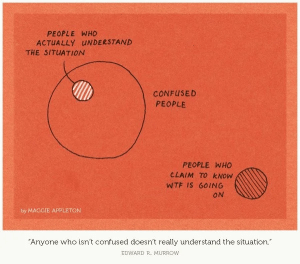
Edward R. Murrow captured this leg of the journey the best: “Anyone who isn’t confused, really doesn’t understand the situation.”
Perhaps a healthy dose of confusion could be a sign that we’re seeing the system exactly as it is: policy-driven, power-shaped, and adapting in ways that don’t always fit narratives.
Like it or not, this is the environment we’re now operating in. Markets held up by policy support. Real-economy businesses navigating slower turns. Risks forming in places that don’t make headlines.
The path forward belongs to those willing to move anyway, with discipline and preparation.
Conditions may shift, but the work remains. Capital still needs structure. Businesses still have to operate. Families still rely on steady ground.
At Dare, we build partnerships designed to endure volatility, uncertainty, and the full arc of a cycle. Once the journey starts, we see it through.
As a Dare Back Room Service partner, you’ll get access to:
- Greater Income (like a lot more)
- Owning assets instead of commissions
- Zero investment down
- No personal liability
- Fifty-fifty split on risks and profits
- Portfolio management software from NN6, LLC
Ready to learn more? Give us a call.
If you enjoyed this newsletter, pass it along to your friends.
Until next time,